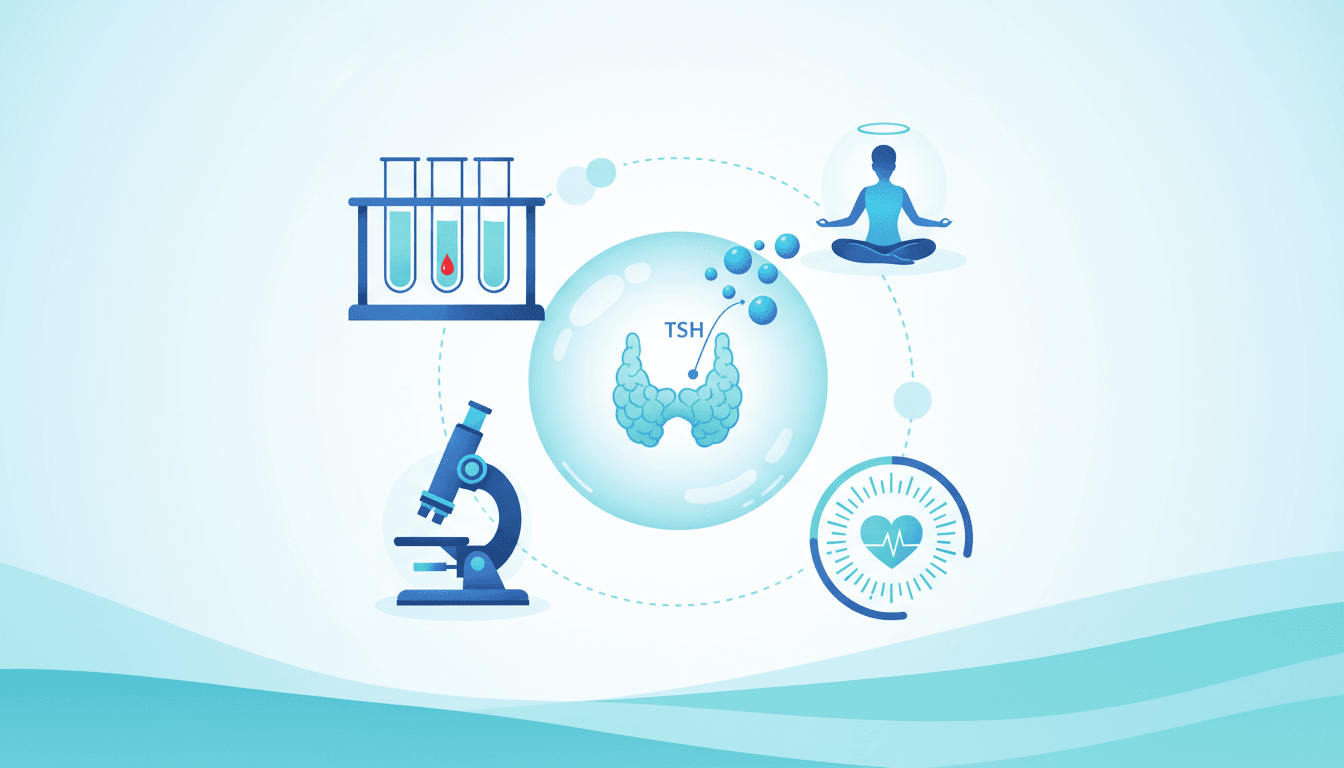
What Is TSH Levels?
Thyroid-Stimulating Hormone (TSH) is a critical biomarker produced by the pituitary gland in your brain. It acts as the primary messenger in the body's thyroid regulatory system. When measured, TSH levels provide a direct reflection of how hard your pituitary gland is working to stimulate your thyroid gland to produce its own hormones: thyroxine (T4) and triiodothyronine (T3). Think of TSH as the body's thermostat for thyroid function; when thyroid hormone levels are low, the pituitary releases more TSH to "turn up the heat," and when levels are high, it releases less.
Doctors routinely order a TSH test as the first-line screening tool for thyroid disorders. It is considered the most sensitive and reliable single test for detecting both an underactive thyroid (hypothyroidism) and an overactive thyroid (hyperthyroidism). According to the American Thyroid Association, TSH testing is recommended for evaluating symptoms like unexplained fatigue, weight changes, depression, or irregular heart rate, and is also a standard part of routine health check-ups, especially for women over 60 and those with a family history of thyroid disease. This test primarily relates to the endocrine system, specifically the hypothalamic-pituitary-thyroid (HPT) axis, which involves the hypothalamus in the brain, the pituitary gland, and the thyroid gland in the neck. Its function is intimately tied to metabolism, energy production, heart rate, body temperature, and mood regulation.
Normal TSH Levels Ranges
By Age and Gender
Reference ranges for TSH can vary slightly between laboratories, but major institutions like the American Thyroid Association (ATA) and the American Association of Clinical Endocrinologists (AACE) provide standard guidelines. The following table outlines these ranges. Note: Conventional units are mIU/L, which are identical to SI units (IU/L).
| Group | Low | Normal (Reference Range) | Optimal | High |
|---|---|---|---|---|
| Adult Men | < 0.4 mIU/L | 0.4 - 4.2 mIU/L | 0.5 - 2.5 mIU/L | > 4.2 mIU/L |
| Adult Women | < 0.4 mIU/L | 0.4 - 4.2 mIU/L | 0.5 - 2.5 mIU/L | > 4.2 mIU/L |
| Children (1-18 yrs) | Varies by age | 0.7 - 5.5 mIU/L | N/A | > 5.5 mIU/L |
| Pregnant Women | < 0.2 mIU/L | Trimester-specific: 1st: 0.1-2.5 mIU/L 2nd: 0.2-3.0 mIU/L 3rd: 0.3-3.0 mIU/L | Within trimester-specific range | Above trimester-specific range |
| Elderly (>70 yrs) | < 0.4 mIU/L | 0.5 - 5.0 mIU/L | 1.0 - 4.0 mIU/L | > 5.0 mIU/L |
*Ranges for children are broader and age-dependent; consult a pediatric endocrinologist for precise interpretation.
What "Normal" vs "Optimal" Means
The "normal" or reference range (typically 0.4-4.2 mIU/L) is a statistical calculation derived from testing a large population. It indicates where approximately 95% of apparently healthy individuals' results fall. However, being within this broad range does not guarantee optimal thyroid function. Many functional medicine practitioners and studies, including those cited by the AACE, suggest an "optimal" or functional range is narrower, often between 0.5 and 2.5 mIU/L for non-pregnant adults.
Why does optimal matter for preventive health? Individuals with TSH levels in the upper part of the reference range (e.g., 2.5-4.2 mIU/L) may experience subtle, subclinical symptoms of hypothyroidism like mild fatigue, brain fog, or difficulty losing weight, even though they are technically "normal." Research in the Journal of Clinical Endocrinology & Metabolism has also indicated that TSH levels above 2.5 mIU/L may be associated with a higher risk of developing overt hypothyroidism over time. Targeting an optimal range focuses on promoting vibrant health and preventing the progression of disease, rather than simply avoiding pathology.
What Do Abnormal Results Mean?
High TSH Levels
A high TSH level is the most common abnormal finding and typically indicates an underactive thyroid, or primary hypothyroidism. The pituitary gland is releasing more TSH in an attempt to prod a sluggish thyroid gland into action.
Causes:- Hashimoto's Thyroiditis: The leading cause in the US, an autoimmune disorder where the body attacks the thyroid gland.
- Iodine Deficiency: Iodine is essential for thyroid hormone production; deficiency can cause gland enlargement (goiter) and high TSH.
- Thyroid Treatment Over-correction: Overtreatment for hyperthyroidism with radioiodine or anti-thyroid drugs.
- Thyroid Surgery/Radiation: Partial or complete removal of the thyroid gland.
- Certain Medications: Lithium, amiodarone, some chemotherapy drugs, and opioids.
- Pituitary Tumor: A rare cause where a non-cancerous tumor produces excess TSH.
- Severe Illness or Recovery: Acute illness can temporarily alter TSH.
Low TSH Levels
A low TSH level usually suggests an overactive thyroid, or hyperthyroidism, as the pituitary senses excess thyroid hormone and slows TSH production.
Causes:- Graves' Disease: The most common cause, an autoimmune disorder that stimulates the thyroid to overproduce hormone.
- Thyroid Nodules: Toxic nodules or a multinodular goiter that produce hormone autonomously.
- Excessive Thyroid Medication: Taking too much levothyroxine for hypothyroidism.
- Thyroiditis: Inflammation of the thyroid (e.g., postpartum thyroiditis) causing a temporary leak of hormones.
- Excessive Iodine Intake: From diet or contrast dyes used in medical imaging.
- Pituitary Gland Damage (Secondary Hypothyroidism): A damaged pituitary fails to produce enough TSH, leading to low TSH and low thyroid hormone—a different condition.
- Early Pregnancy: hCG hormone can mildly stimulate the thyroid, slightly lowering TSH.
How to Improve Your TSH Levels
This information is for educational purposes. Always consult your healthcare provider before making any changes to your diet, lifestyle, or supplements, especially if you have a diagnosed thyroid condition.Diet and Nutrition
A balanced diet supports overall thyroid function. For hypothyroidism, focus on nutrients that aid hormone production. For hyperthyroidism, a nutrient-dense diet helps manage symptoms and support health.
Foods that help: Iodine-Rich Foods (if deficient): Seaweed (1 sheet nori daily), cod (3 oz provides 99 mcg), iodized salt. Caution: Excess iodine can worsen both hypo- and hyperthyroidism.*- Selenium-Rich Foods: Critical for converting T4 to T3. Brazil nuts (just 1-2 nuts daily provides ~68-91 mcg), tuna, eggs.
- Zinc-Rich Foods: Supports TSH production. Oysters, beef, pumpkin seeds (1 oz provides 2.2 mg).
- Iron-Rich Foods: Iron deficiency impairs thyroid function. Lentils (1 cup cooked provides 6.6 mg), spinach, red meat.
- Anti-inflammatory Foods: Fatty fish (salmon, mackerel), berries, and olive oil to help modulate autoimmune activity.
- Goitrogens (in excess, especially if raw): Can interfere with iodine uptake. Cooking deactivates most. Includes raw cruciferous vegetables (kale, broccoli, cabbage), soy products, and millet.
- Ultra-Processed Foods & Sugars: Promote inflammation.
- Excessive Fiber: Can interfere with absorption of thyroid medication if taken simultaneously.
| Food | Key Nutrient | Suggested Serving | Benefit |
|---|---|---|---|
| Brazil Nuts | Selenium | 1-2 nuts daily | T4 to T3 conversion |
| Wild-Caught Salmon | Omega-3s, Selenium | 3-4 oz, 2x/week | Reduces inflammation |
| Eggs | Iodine, Selenium | 1-2 whole eggs daily | Complete nutrient package |
| Shellfish (Oysters) | Zinc, Iodine | 3 oz occasionally | Hormone production |
| Blueberries | Antioxidants | 1/2 cup daily | Fights oxidative stress |
| Yogurt (Iodized) | Iodine, Probiotics | 1 cup daily | Gut & thyroid health |
| Lentils | Iron, Fiber | 1/2 cup cooked | Prevents iron deficiency |
| Spinach (cooked) | Iron, Magnesium | 1 cup cooked | Supports enzyme function |
| Chicken Breast | Protein, Zinc | 3-4 oz daily | Tissue repair & hormone synthesis |
| Seaweed (Nori) | Iodine | 1 sheet occasionally | Corrects iodine deficiency |
Lifestyle Changes
Exercise: Regular, moderate exercise can help regulate metabolism and improve energy levels. For hypothyroidism, consistent activity (30 mins, 5x/week of brisk walking, cycling, swimming) can combat fatigue and weight gain. For hyperthyroidism, gentler exercises like yoga or tai chi may help manage stress and heart rate, avoiding excessive high-intensity workouts. Sleep and Stress Management: Chronic stress elevates cortisol, which can disrupt the HPT axis and impair T4 to T3 conversion. Prioritize 7-9 hours of quality sleep per night. Incorporate stress-reduction techniques like mindfulness meditation, deep breathing exercises, or spending time in nature, as recommended by studies on stress and endocrine function. Supplements (Evidence-Based): Always discuss with your doctor. Selenium: 200 mcg daily of selenomethionine. Strong evidence for reducing thyroid antibodies in Hashimoto's (Journal of Clinical Endocrinology & Metabolism*).- Vitamin D: 1000-2000 IU daily (dose based on blood levels). Deficiency is linked to autoimmune thyroid disease.
- Zinc: 15-30 mg daily. May help normalize TSH and improve T3 levels in deficient individuals.
Related Tests to Consider
TSH is an excellent screening tool, but a full thyroid panel provides a more complete picture. Key related biomarkers include:
- Free T4: Measures the active, unbound thyroxine hormone. Helps confirm hypothyroidism (low) or hyperthyroidism (high).
- Free T3: Measures the most active thyroid hormone. Useful if symptoms persist despite normal TSH and Free T4.
- Thyroid Peroxidase Antibodies (TPOAb): Detects autoimmune attack on the thyroid, diagnosing Hashimoto's or predicting risk.
- Thyroglobulin Antibodies (TgAb): Another marker for autoimmune thyroid disease.
- Reverse T3 (rT3): An inactive form of T3; may be elevated during illness or stress, providing insight into thyroid hormone metabolism.
- Thyroid Ultrasound: Imaging test to assess gland structure, nodules, or inflammation.
Testing TSH with Free T4 and TPO antibodies is often the initial comprehensive panel, as it can diagnose most common thyroid disorders and identify autoimmune causes.
When to Get Tested
Recommended Testing Frequency:- General Screening: The ATA suggests adults, particularly women, be screened beginning at age 35 and every 5 years thereafter. Many doctors screen earlier and more frequently during annual physicals if risk factors exist.
- With Diagnosed Thyroid Disease: Typically every 6-12 months once stable, or more frequently (every 6-8 weeks) after a medication dose change.
- During Pregnancy: Screening is recommended at the first prenatal visit if there is a personal/family history of thyroid disease or symptoms. Management requires trimester-specific monitoring.
- Fasting: Not strictly necessary, but some labs recommend it for consistency.
- Timing: TSH follows a diurnal rhythm, highest in the early morning. For consistency, try to have your blood drawn at the same time of day, preferably in the morning.
- Medications: Inform your doctor of all medications/supplements. Crucially, if you take levothyroxine, take it AFTER your blood draw for the most accurate TSH reading.
Frequently Asked Questions
1. Is a TSH level of 5.5 mIU/L normal?While some labs extend the reference range to 5.5, a level of 5.5 mIU/L is generally considered elevated and indicative of subclinical or mild hypothyroidism, especially if you have symptoms. The AACE recommends treatment consideration for levels above 4.5 mIU/L with positive antibodies or symptoms.
2. Can stress affect TSH levels?Yes, significant acute or chronic physical or emotional stress can temporarily elevate cortisol, which may suppress TSH production or alter thyroid hormone conversion, leading to fluctuations in TSH levels.
3. What is a dangerous TSH level?Extremely high TSH (>10 mIU/L) indicates overt hypothyroidism requiring prompt treatment. Very low TSH (<0.1 mIU/L) suggests severe hyperthyroidism, which risks heart complications like atrial fibrillation. Both extremes require immediate medical attention.
4. Why is my TSH high but my T4 is normal?This is called subclinical hypothyroidism. Your thyroid is struggling, so your pituitary releases more TSH (high) to maintain normal T4 output. It's a warning sign that may progress to overt hypothyroidism.
5. Can you have thyroid symptoms with normal TSH?Yes. Symptoms may be due to other causes, or you may have issues with T4 to T3 conversion, thyroid hormone resistance, or your "normal" TSH may be suboptimal for you (e.g., 3.8 mIU/L). Further testing (Free T3, antibodies) may be needed.
6. How quickly can TSH levels change?TSH responds relatively slowly. After a change in thyroid medication dosage, it takes 6-8 weeks for TSH to stabilize to a new steady state, which is why follow-up tests are scheduled at that interval.
7. Is TSH of 2.8 good for pregnancy?For the first trimester, the ATA recommends an upper limit of 2.5 mIU/L. A TSH of 2.8 may be above the ideal trimester-specific target and should be discussed with your obstetrician or endocrinologist, as even mild elevation can impact pregnancy outcomes.
8. Does weight loss improve TSH levels?For some individuals with obesity, significant weight loss can lead to a modest reduction in TSH levels. However, treating elevated TSH with medication is the primary way to correct the hormone imbalance, which may then facilitate weight loss.
9. Can I check my TSH at home?Yes, several FDA-cleared home collection test kits are available. You collect a finger-prick blood sample and mail it to a lab. While convenient for screening, abnormal results should always be confirmed and managed with a healthcare provider.
10. What is the difference between TSH and T4?TSH is the signal from the pituitary gland telling the thyroid what to do. T4 is the main hormone produced by the thyroid in response to TSH. Think of TSH as the "gas pedal" and T4 as the "fuel" being produced.
This information is for educational purposes. Always consult your healthcare provider for diagnosis and treatment of any medical condition. Sign up for HOP to analyze your labs with AI and get personalized insights into your TSH levels and overall thyroid health. Get started here.